
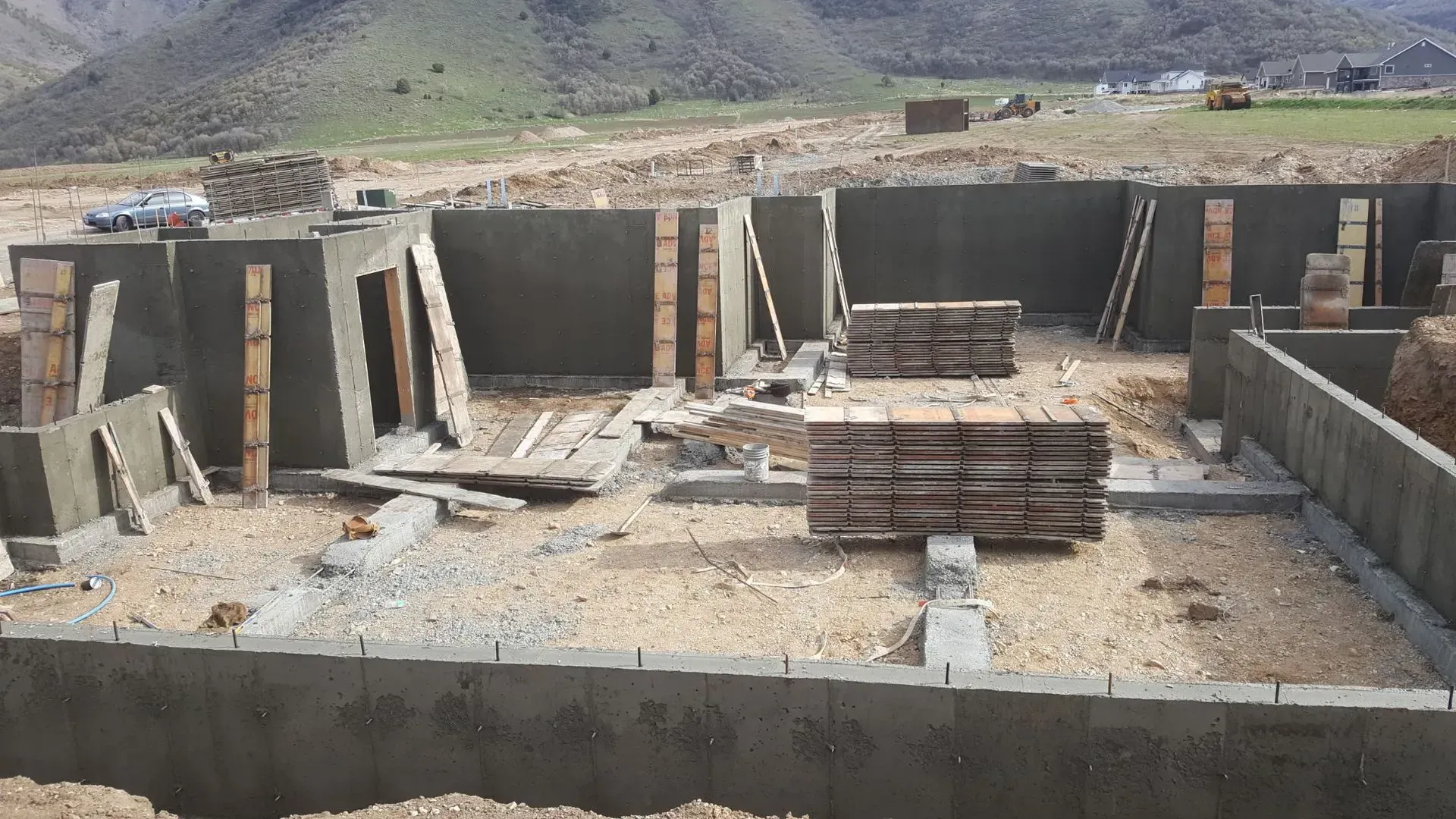
Structural Work Built for Soil Cycles
Concrete Foundations in Ogden for residential homes requiring design beyond add-on utility work
Northern Utah soil conditions cycle through freeze and thaw periods that expose weak foundation design within the first winter, revealing whether the concrete was placed at proper depth and reinforced to handle ground movement. You need foundation work when constructing a new home, replacing failed sections that crack and shift seasonally, or adding square footage that requires structural continuity with existing footings. Clifton Higley Construction UT builds concrete foundations for residential homes and new construction across Weber County and surrounding Northern Utah markets, where structural design separates top-end installations from low-cost add-on work that fails under load or weather exposure.
Foundation installation includes site preparation that removes unstable topsoil, footing installation excavated to frost line depth, and concrete slab or basement pour finished to meet code requirements for load-bearing structures. The sequence matters because inspections occur after footing placement and again before backfilling, with each stage verified before the next begins.
Request a detailed estimate based on your lot conditions and planned structure size.
What Changes After Foundation Installation Completes
Foundation work transforms a graded lot into a stable platform ready for framing, with anchor bolts embedded at regular intervals to secure the sill plate that connects wood framing to the concrete base. The concrete surface is finished level within tolerance, meaning framing crews don't shim excessively to correct for slopes or dips that would otherwise translate into crooked walls.
After the foundation cures and framing begins, you'll see that the structure remains square, with corners meeting at true right angles and no gaps appearing between the sill plate and the concrete. The foundation stays dry because drainage installed during excavation directs water away from the perimeter, and no efflorescence or white mineral deposits appear on the surface, which would indicate moisture wicking through the concrete.
Foundation work for slabs differs from basements in excavation depth and waterproofing requirements, but both demand proper reinforcement placement to prevent cracking as the concrete cures and shrinks slightly. Basement installations include perimeter drainage systems that weren't standard decades ago but are now required to manage groundwater and surface runoff in areas with seasonal snowmelt.
Homeowners planning new construction or additions ask about timing, costs, and what separates quality foundation work from budget installations that develop problems.
Answers to Frequent Foundation Questions
What is the difference between a slab and a basement foundation?
A slab is a single concrete pour at grade level, while a basement involves deeper excavation, perimeter walls, and additional waterproofing to create usable space below ground.
How much does a residential foundation cost?
Costs depend on excavation depth, whether the design includes a basement or crawl space, soil conditions that require extra gravel or compaction, and the size of the building footprint.
What should I look for in a foundation contractor?
Look for contractors who discuss frost depth, drainage planning, and reinforcement placement during estimates, rather than only quoting price without explaining how site conditions affect the installation process.
When does foundation work happen in the construction schedule?
Foundations are installed after site grading and utility rough-ins but before framing begins, with inspections required at the footing stage and again before covering the concrete with backfill.
How does soil type in Ogden affect foundation design?
Clay-heavy soils expand when wet and contract when dry, requiring wider footings to distribute loads, while rocky or sandy soils may need less width but more depth to reach stable bearing layers.
Clifton Higley Construction UT serves homeowners across Northern Utah who need foundation work that accounts for freeze-thaw cycles and soil movement, differentiating structural installations from low-end add-on contractors. Schedule a consultation to discuss your project and site-specific requirements.