
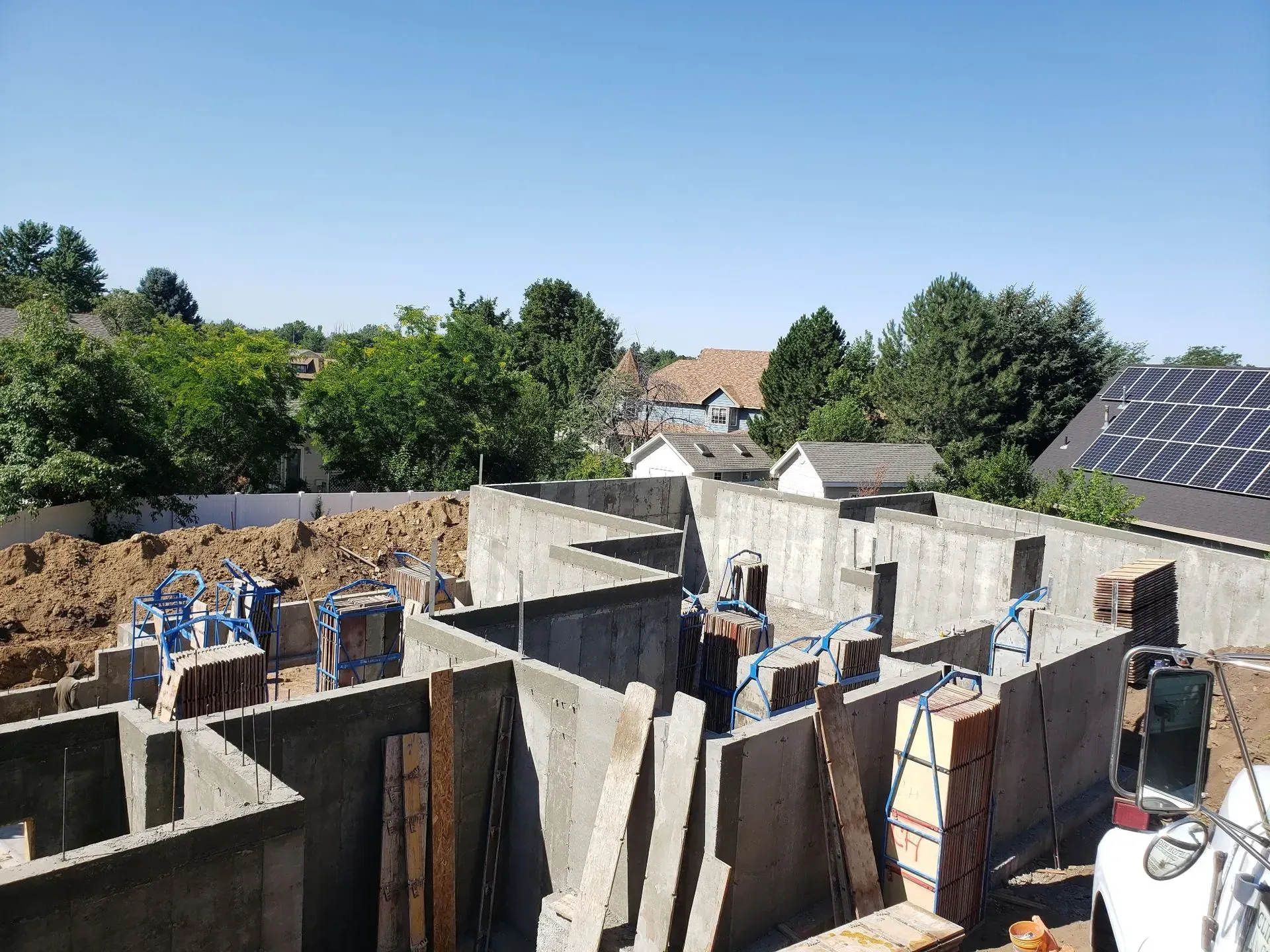
Footings That Transfer Loads Through Winter
Concrete Footings in Ogden for residential structures requiring precise depth and load distribution
Deep frost lines in Box Elder, Cache, Davis, and Weber counties create specific excavation requirements that affect every concrete footing installation across Northern Utah. Clifton Higley Construction UT provides concrete footings for residential and foundation work throughout the region, where soil compaction and concrete mix selection determine whether a structure remains level after the ground freezes and thaws repeatedly. You're looking at footing work when building new, adding square footage, or replacing deteriorated sections that no longer transfer building weight evenly across the soil.
The process involves excavation to the frost depth established by local code, soil compaction to eliminate voids that would settle under load, and concrete placement that creates a continuous base for walls or columns. Mix specifications vary based on whether the footing supports a single-story structure or a heavier multi-level home, and finishing ensures the top surface remains level so walls built above don't develop stress cracks from uneven support.
Arrange an on-site assessment to determine excavation depth and soil conditions for your project.
How Footings Address Load Transfer
Footings function by spreading the concentrated weight of walls or posts across a wider area of soil, reducing pressure per square inch and preventing the structure from sinking into softer ground layers. The width and thickness of the footing depend on the load it carries and the bearing capacity of the soil, with wider footings required when soil tests reveal lower compaction or higher clay content that shifts when wet.
Once the concrete cures and the structure is complete, you'll observe that floors remain level, doors close without binding, and no cracks appear in drywall above windows or along ceiling lines where walls meet. These outcomes indicate that footings are distributing weight evenly and not settling unevenly due to inadequate width or depth.
Footing installation also includes consideration of drainage slope, because water pooling near the base accelerates freeze-thaw damage and increases pressure on the foundation during winter. Gravel backfill around footings provides a path for water to drain away rather than accumulating in direct contact with concrete surfaces.
Footing installations across Northern Utah involve depth, timing, and coordination questions that affect project schedules and structural outcomes.
Common Questions About Footing Work
How deep do footings need to be in Northern Utah?
Frost line depth varies by county but typically ranges from 36 to 48 inches, requiring excavation below that line to prevent heaving when frozen ground expands beneath the footing.
What happens if footings are poured at different depths?
Uneven footing depth causes differential settlement, where one section of the structure sinks more than another, leading to cracked walls and floors that slope noticeably over time.
When can footings be poured in cold weather?
Concrete placement in temperatures below 40 degrees requires heated enclosures or blankets to maintain curing temperatures, because freezing disrupts the hydration process and weakens the final strength.
What's included in footing installation versus foundation work?
Footings are the base layer that supports foundation walls or slabs, installed first and inspected separately before vertical concrete work or framing proceeds above them.
How do you verify soil compaction before pouring?
Soil compaction is tested using a plate compactor and verified by checking for bounce-back when walking the excavated area, with additional gravel base added if the soil remains soft or uneven.
Clifton Higley Construction UT handles footing work across Northern Utah, including Logan, Layton, and the Salt Lake City corridors where frost depth and soil conditions require structural planning beyond standard residential projects. Contact us to review your building plans and site-specific soil characteristics.